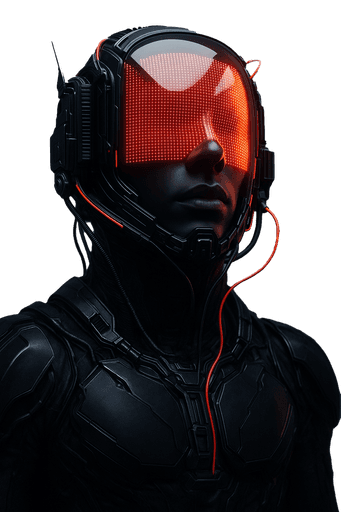
UI / Driven by
Gen AI CLIP/

GenAI LMM/

1.8 Trillion
Cloud Parameters
[Input Prompt] →
[Text Encoder (CLIP)] →
[Latent Space] →
[Diffusion Process] →
[Image Decoder]
[Image Output]
UI / Driven by
Gen AI CLIP/
GenAI LMM/
1.8 Trillion
Cloud Parameters
[Input Prompt] →
[Text Encoder (CLIP)] →
[Latent Space] →
[Diffusion Process] →
[Image Decoder]
[Image Output]

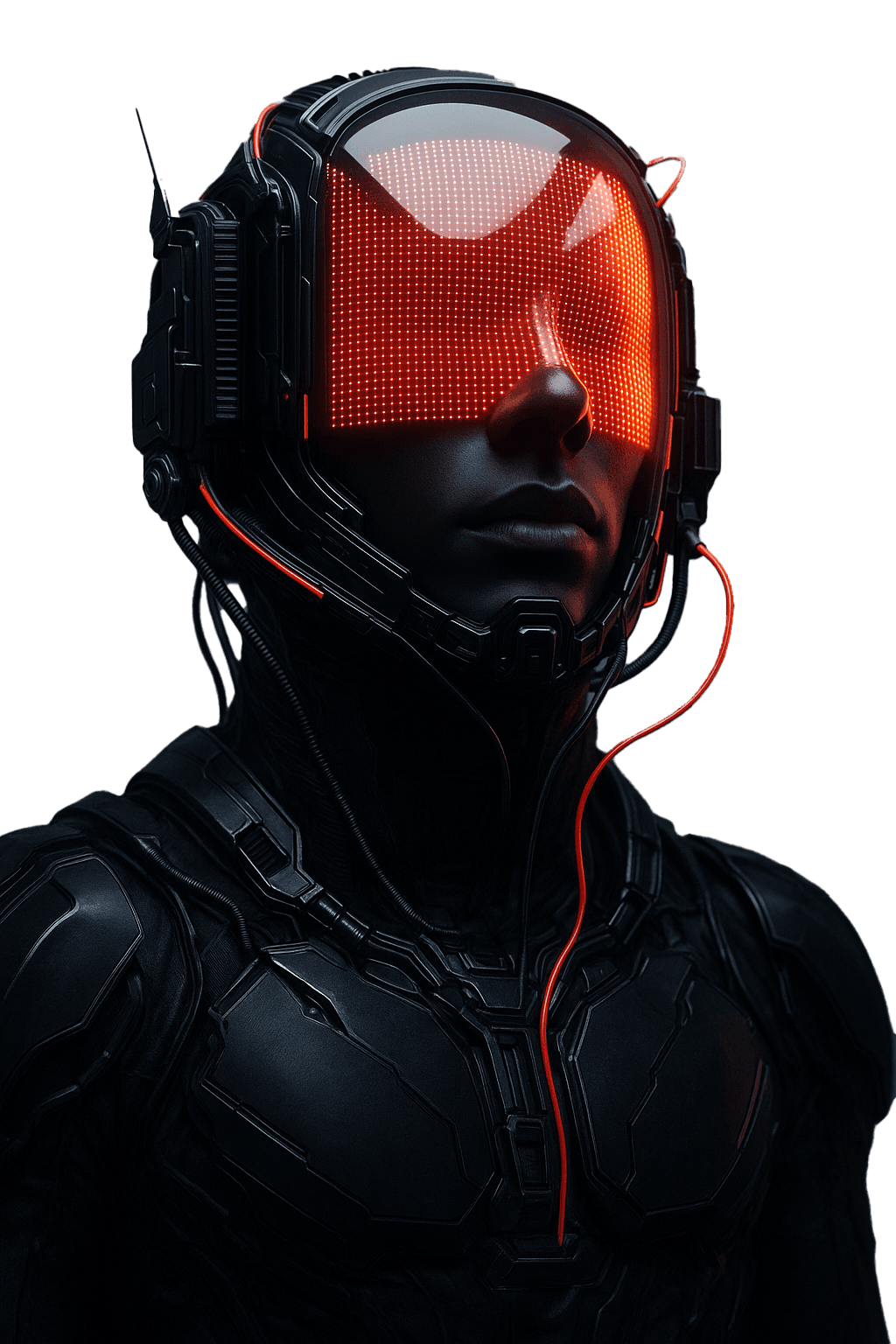
UI / Driven by
Gen AI CLIP/.™
Gen AI LMMs/
1.8 Trillion
Cloud Parameters
[Input Prompt] →
[Text Encoder (CLIP)] →
[Latent Space] →
[Diffusion Process] →
[Image Decoder]
Sci-Fi Warrior [Image Output]
1.8 Trillion/
Cloud-Based
Parameters
Powering Gen AI | LMM
[Input Prompt] →
[Text Encoder (CLIP)] →
[Latent Space] →
[Diffusion Process] →
[Image Decoder]
Sci-Fi Warrior [Image Output]
Gen AI LMMs/

Trained
on 1.8 Trillion
Cloud-Based Parameters
[Input Prompt Engineering] →
[Text Encoder (CLIP)] →
Transformers [Latent Space] →
[Diffusion Process] →
Perceptrons [Image Decoder] →
Warrior [Image Output]
UI / Driven by
Gen AI CLIP/.™
Gen AI LMMs/
1.8 Trillion
Cloud Parameters
[Input Prompt] →
[Text Encoder (CLIP)] →
[Latent Space] →
[Diffusion Process] →
[Image Decoder]
Sci-Fi Warrior [Image Output]
1.8 Trillion/
Cloud-Based
Parameters
Powering Gen AI | LMM
[Input Prompt] →
[Text Encoder (CLIP)] →
[Latent Space] →
[Diffusion Process] →
[Image Decoder]
Sci-Fi Warrior [Image Output]
Gen AI LMMs/
Trained
on 1.8 Trillion
Cloud-Based Parameters
[Input Prompt Engineering] →
[Text Encoder (CLIP)] →
Transformers [Latent Space] →
[Diffusion Process] →
Perceptrons [Image Decoder] →
Warrior [Image Output]
{ "Attention Is All You Need" }
{ "Attention Is All You Need" }
{ "Attention Is
All You Need" }
In the rapidly evolving field of artificial intelligence, mastering prompt design has become a critical skill to set your ideas free. Whether you’re a content creator, developer, business professional, or AI enthusiast, understanding how to craft the perfect prompt can dramatically improve your results when working with AI models.
In the rapidly evolving field of artificial intelligence, mastering prompt design has become a critical skill to set your ideas free. Whether you’re a content creator, developer, business professional, or AI enthusiast, understanding how to craft the perfect prompt
can dramatically improve your results
when working with AI models.
In the rapidly evolving field of artificial intelligence, mastering prompt design has
become a critical skill
to set your ideas free.
Whether you’re a content creator, developer, business professional, or AI enthusiast, understanding how to craft the perfect prompt can dramatically improve your results when working with AI models.
Introducing
the LMArena
for The World's
Most Powerful
Gen AI LMM
Introducing
the LMArena for
The World's
Most Powerful
Gen AI LMM.
In the land of limitless models, every launch is ‘revolutionary’—until next week’s ‘most powerful’ shows up with shinier slides and bigger multi-modal benchmarks from The Humanity's Last Exam [HLE] 👽
w/ over 2.5K academic questions.
One LMM to rule them all? Apparently, every model got the blue memo—turns out the only thing more inflated than their parameters is their self-esteem.






Generative
AI LMMs
A subfield of artificial intelligence that uses generative models to produce text, images, videos, or other forms
of data.
Generative
AI-LMMs
A subfield of artificial intelligence that uses generative models to produce text, images, videos, or other forms of data.
Generative AI LMM has made its appearance in a wide variety of industries, radically changing the dynamics of content creation, analysis, and delivery.
In healthcare, generative AI is instrumental in accelerating drug discovery by creating molecular structures with target characteristics and generating radiology images for training diagnostic models.
This extraordinary ability not only enables faster and cheaper development but also enhances medical decision-making. In finance, generative AI is invaluable as it generates datasets to train models and automates report generation with natural language summarization capabilities.
It automates content creation, produces synthetic financial data, and tailors customer communications. It also powers chatbots and virtual agents. Collectively, these technologies enhance efficiency, reduce operational costs, and support data-driven decision-making in financial institutions.
The media industry makes use of generative AI for numerous creative activities such as music composition, scriptwriting, video editing, and digital art. The educational sector is impacted as well, since the tools make learning personalized through creating quizzes, study aids, and essay composition. Both the teachers and the learners benefit from AI-based platforms that suit various learning patterns.

Large multi-modal models [LMMs] The rise of these models can be attributed to several key factors. Firstly, the availability of massive amounts of multi-modal data, such as image-text pairs from the web, has enabled the training of models on an unprecedented scale.
Secondly: the development of powerful deep learning architectures, such as Transformers, has allowed for the efficient processing and fusion of information from multiple modalities, determined for their multi-dimensional media [basically, LLMs on steroids.]
Large language models [LLMs] The rise of multi-modal large models can be attributed to several key factors. Firstly, the availability of massive amounts of multi-modal data, such as image-text pairs from the web, has enabled the training of models on an unprecedented scale. Secondly, the development of powerful deep learning architectures, such as Transformers, has allowed for the efficient processing and fusion of information from multiple modalities.
Computational Resources Training and running large multimodal models require significant computational resources, making them expensive and less accessible for smaller organizations or independent researchers. Interpretability and explainability: As with a complex AI model, understanding how these models make decisions can be difficult.
Large language models [LLMs] The rise of multi-modal large models can be attributed to several key factors. Firstly, the availability of massive amounts of multi-modal data, such as image-text pairs from the web, has enabled the training of models on an unprecedented scale. Secondly, the development of powerful deep learning architectures, such as Transformers, has allowed for the efficient processing and fusion of information from multiple modalities.
Computational Resources Training and running large multimodal models require significant computational resources, making them expensive and less accessible for smaller organizations or independent researchers. Interpretability and explainability: As with a complex AI model, understanding how these models make decisions can be difficult.
Finally, consistency with Apple’s Foundational Multi-Modal Model ensures that the user interface (app) feels familiar within the Apple TV ecosystem while maintaining its own brand identity.
Gen AI
Tokens
{256,000}
Parameters
{1.7 – 1.8 Trillion}
Language Corpus
{70% Tr Data + 30% Testing Data}
Gen AI
Tokens
{256,000}
Parameters
{1.7 - 1.8 Trillion}
Language Corpus
{70% Tr Data + 30% Testing Data}
Gen AI
Tokens
{256,000}
Parameters
{1.7 - 1.8 Trillion}
Language Corpus
{70% Tr Data + 30% Testing Data}
{LLM/LMM-based Navigation UI}
LLM/LMM-based Navigation UI.
{LLM/LMM-based Navigation UI}
A large language model [LLM] is a language model trained with self-supervised machine learning on a vast amount of text, designed for natural language processing tasks, especially language generation all currently combined into a poly-structured
Large Multi-modal Model [LMM] with Contrastive Language-Image Pre-training [CLIP.]
A large language model [LLM] is a language model trained with self-supervised machine learning on a vast amount of text, designed for natural language processing tasks, especially language generation all currently combined into a poly-structured
Large Multi-modal Model [LMM] with
Contrastive Language-Image Pre-training [CLIP.]
A large language model [LLM] is a language model trained with self-supervised machine learning on a vast amount of text, designed for natural language processing tasks, especially language generation all currently combined into
a poly-structured
Large Multi-modal Model [LMM]
with Contrastive Language-Image
Pre-training [CLIP.]

Tokenization
I trust tokenization to segment and encode data for precise language modeling and semantic understanding.
Tokenization
{
01
}
70/30 Corpus
{
02
}
ND Vectors CB
{
03
}
I/O RLHF/CLIP
{
04
}
Neural-Net
{
05
}
UX/UI Patterns
{
06
}
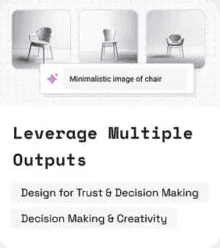
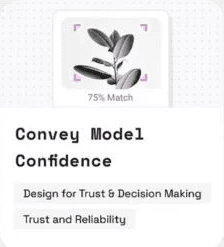

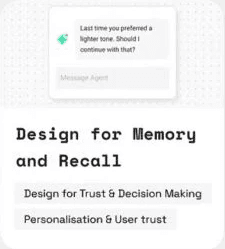
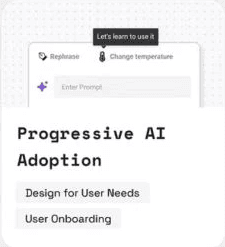
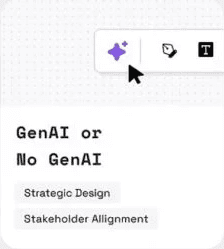
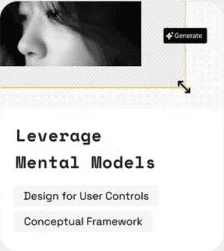
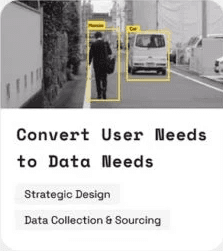
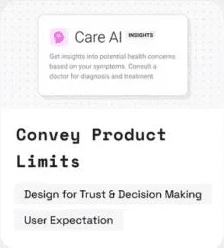
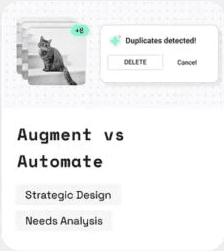
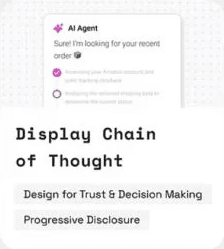
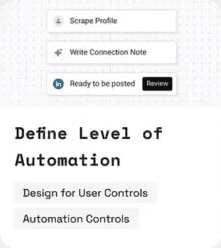
UX/UI Patterns
for Designing
LARGE
multi-modal models
of Gen AI experiences.
UX/UI Patterns
for Designing
LARGE
multi-modal models
of Gen AI experiences.
UX/UI Patterns
for Designing
LARGE
multi-modal models
of Gen AI experiences.
UI/Gen AI
2023
UI Patterns driven by Gen AI
Methods
Technology Guidelines for building user-centric Interfaces.
AI or not AI
<User-Centered Design Foundation/>®
UX Needs
</method to ask>
Ar vs Auto
</method to ask>
Levels
</method to ask>
Sources
</method to ask>
Adoption
</method to ask>
_
<User-Centered Design Foundation/>®
UI/Gen AI
2023
UI Patterns driven by Gen AI
Methods
Technology Guidelines for building user-centric Interfaces.
AI
<User-Centered Design Foundation/>®
AI
<User-Centered Design Foundation/>®
Needs
</method to ask>
Needs
</method to ask>
Ar
</method to ask>
Ar
</method to ask>
Levels
</method to ask>
Levels
</method to ask>
Sources
</method to ask>
Sources
</method to ask>
Adoption
</method to ask>
Adoption
</method to ask>
_
<User-Centered Design Foundation/>®
Interfaces
for the Age of
Interfaces
for the Age of
Interfaces
for the Age of
Intelligent Systems
Intelligent Systems
Intelligent Systems
As AI systems grow more dynamic and probabilistic, we’re shifting away from static interfaces toward adaptive, intelligent experiences. This evolution demands a new design language—one grounded in transparency, trust, and flexibility.
As AI systems grow more dynamic and probabilistic, we’re shifting away from static interfaces toward adaptive, intelligent experiences. This evolution demands a new design language—one grounded in transparency, trust, and flexibility.
As AI systems grow more dynamic and probabilistic, we’re shifting away from static interfaces toward adaptive, intelligent experiences. This evolution demands a new design language—one grounded in transparency, trust, and flexibility.
Gen AI/HCI
UX/UI Design & Development
2023
15+ next-gen UI patterns engineered to power human-centered design in Generative AI, LMMs, and LLMs—where interface meets intelligence.
AI or not AI
<User-Centered Design Foundation/>®
UX Needs
<User-Centered Design Foundation/>®
Ar vs Auto
<User-Centered Design Foundation/>®
Levels
<User-Centered Design Foundation/>®
Sources
<User-Centered Design Foundation/>®
Adoption
<User-Centered Design Foundation/>®
Models
<User-Centered Design Foundation/>®
Trust
<User-Centered Design Foundation/>®
Chains
<User-Centered Design Foundation/>®
Multi I/O
<User-Centered Design Foundation/>®
Recall
<User-Centered Design Foundation/>®
Privacy
<User-Centered Design Foundation/>®
Parameters
<User-Centered Design Foundation/>®
Co-Editing
<User-Centered Design Foundation/>®
Automation
<User-Centered Design Foundation/>®
I/O Errors
<User-Centered Design Foundation/>®
Feedback
<User-Centered Design Foundation/>®
Evaluation
<User-Centered Design Foundation/>®
For designers building AI-first products, it’s crucial to consider the interaction contract between humans and machines. Whether you’re working with chat-bots, generative tools, or autonomous agents, thoughtful interface design can transform AI from a black box into a truly empowering experience.
For designers building AI-first products, it’s crucial to consider the interaction contract between humans and machines. Whether you’re working with chat-bots, generative tools, or autonomous agents, thoughtful interface design can transform AI from a black box into a truly empowering experience.
For designers building AI-first products, it’s crucial to consider the interaction contract between humans and machines. Whether you’re working with chat-bots, generative tools, or autonomous agents, thoughtful interface design can transform AI from a black box into a truly empowering experience.
.
1
3